
Botanical Description of Neem
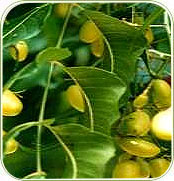
Neem tree is found in abundance in tropical and semi-tropical regions like India, Burma. It cannot grow in extreme cold climate, though it can survive without much rainfall. It is an ideal plant as it can be grown indoors and requires least maintenance. Most of the problems relating to the growth of neem are due to over watering, in case the neem leaves begin to turn yellow, it is a sign of over watering or that the tree has been given too much fertilizer.
Description of Neem
Neem is a tall evergreen tree having small bright green leaves. It is up to 100 feet tall.Neem Bark: The stem of a neem tree can grow up to a diameter of 2.5-3 m. The bark is rough and can be pale or greyish-black in color. Bark of neem is used to manufacture pesticides.
Neem Flowers: Neem tree bears small white colored flowers and star shaped, with a pleasant smell.
Neem Fruits: Neem tree generally bear fruits between the age of 3 and 5, and the fruits are edible.
Botanical Description
The name is derived from the Persian word "azaddhirakt" which means "noble tree".Kingdom : Plantae
Division: Magnoliophyta
Class: Magnoliopsida
Order: Sapindales
Family:Meliaceae, The mahogany tree family
Genus: Azadirachta
Species: A. indica
Scientific/Botanical Name:Azadirachta indica
Popular Names of Neem in India
Assamese : NimBengali : Nim, Neemgachh, Neem
Burmese : Tamaka, Thin, Thinboro Tamakha, Bowtamaka, Tama
Gujarati : Limba, Limbado, Leemgo, Danu-jhada, Kohalu Limdo
Hindi : Nim, Nimb, Bal-nimb, Neem, Nind
Kannada : Bevinamara, Bevu, Hebbevu, Kiri-bevu
Konkani : Nim
Kumaoni : Betain
Malayalam : Aryaveppu, Veppu, Aryaveshnu, Rajavedhu, Vepe
Marathi : Kadukhajur, Limba, Limb, Nimbay, Bakayan, Balanti-limb
Oriya : Kakopholo, Limbo, Nimbu, Nimo
Punjabi : Bakam, Bukhain, Drekh, Nim, Neem, Mahaneem
Rajasthani : Neem, Neemro
Sanskrit : Arishta, Nimba, Minbaka
Telugu : Nimbanuv, Vepa, Yeppa, Yapa, Vepachettu, Yapachattu
Urdu : Neem
Neem Names in Different Countries
U.S.A : NeemLatin America : Nim
Spain : Paraiso de India, Margosa
United Kingdom : Indian Lilac, Neem
France : Azadirac de I'Inde, Margosier, Margousier
Germany : Indischer Zedrach, Grossblaettiger Zedrach, Niem, Nim, Niembaum
Burma : Tamaka, Bowtamaka, Thin, Thinboro Tamakha, Tamabin, Tama
Pakistan : Nimuri, Nimmi, Limbo
Malaysia : Dawoon-mambu, Baypay
Indonesia : Mempheuh, Imba, Intaran, Mindi, Mimbo
Kenya : Muarubaini
Iran : Neeb, Azad Darakth e Hind, Nib
Portugal : Margosa, Amargoseira, Nimbo
Singapore : Kohumba, Nimba
Sri Lanka : Nimbu-nimbagaha
Thailand : Sadao India, Kwinin, Dao
Yemen : Meraimarah
Australia : Neem
Papua New Guinea : Neem
Fiji : Neem
Nigeria : Babo Yaro, Dogon Yaro
Tanzania : Mwarobaini
Madagascar : Nim
About Neem
- Neem Remedy
- Dark Circle Home Remedies
- Boils Home Remedies
- Hair Fall Home Remedies
- Arthritis Home Remedies
- Chicken Pox Home Remedies
- Scabies Home Remedy
- Eczema Home Remedies
- Neem Cancer Treatment
- Neem and Diabetes
- Neem Dandruff Remedies
- Neem and Hypertension
- Neem and Heart Disease
- Neem and Digestive Problems
- Neem and Skin Disorders
- Neem and Sexual Disorders
- Neem and Periodontal Problems
- Psoriasis Treatment
- Neem for Dry Skin
- Neem and Ayurveda Applications
- Neem Knowledge Centre
- Medicinal Properties of Neem Tree
- Neem Side Effects
- Biological Control
- Crop / Pest Management
- Neem a Universal Remedy
- Neem Extract Products
- Agriculture Uses of Neem
Trend in Cosmetic Industry
Last few decades have witnessed a great demand for herbal cosmetic products, away from synthetics, this so, because these herbal and natural cosmetics...Know More
Trend in Pharmaceutical Industry
The traditional and the modern medical systems have always co-existed in a large number of countries aroundthe world. While India has the existence of Ayurvedic...Know More
Trend in Health Care Industry
With the rise in healthcare costs, after effects of pharmaceuticals and synthetic products, natural and herbal products are in great demand all over...Know More
Trend in Traditional Medicine Industry
Neem has essentially been used for centuries now, in different traditional medicine systems like Ayurveda and Unani system. It is used to manufacture...Know More